Solved and Unsolved
Others are clearly solved, yet their solutions often ignored
Unsolved:
- Success in romantic relationships
- The Riemann hypothesis
- The Collatz conjecture
- Grappling with mortality
- How to build human-like artificial intelligence
- Free will versus determinism
-
What "human nature" is
-
"Theodicy"
"[the] explanation of why a perfectly good, almighty, and all-knowing God permits evil. The term literally means “justifying God.”."¹⁰
-
How to make people be good
Fixing classism, solipsism, the abuse of power, etc.
Much effort over the millennia. Countless moral systems, with only partial success. -
The Fermi Paradox
There are billions of habitable planets in the universe, yet we've never observed intelligent life, or even life of any kind, elsewhere in the universe
-
The Watchmaker Problem
A watch is made by a watchmaker. The universe exists, so what created the universe? How could something come from nothing?
I have a degree in astronomy, and I can say definitively that the Big Bang doesn't solve the problem. The Big Bang just moves the problem. Nobody knows what caused the Big Bang - where the energy present at the start of the universe came from. Scientists don't know. Nobody knows.
Unsolved isn't unsolvable though
Relevant to the Watchmaker Problem, in 2006 British scientist Roger Penrose, a 2020 Laureate of the Nobel Prize in Physics, proposed a theory called "Conformal cyclic cosmology (CCC)", which proposes an infinitely old universe¹. CCC holds that there have always been cycles of Big Bangs and "conformal rescalings", since literally forever ago¹. The idea is that after a while a "rescaling" shrinks the universe back down, and then the next Big Bang happens.
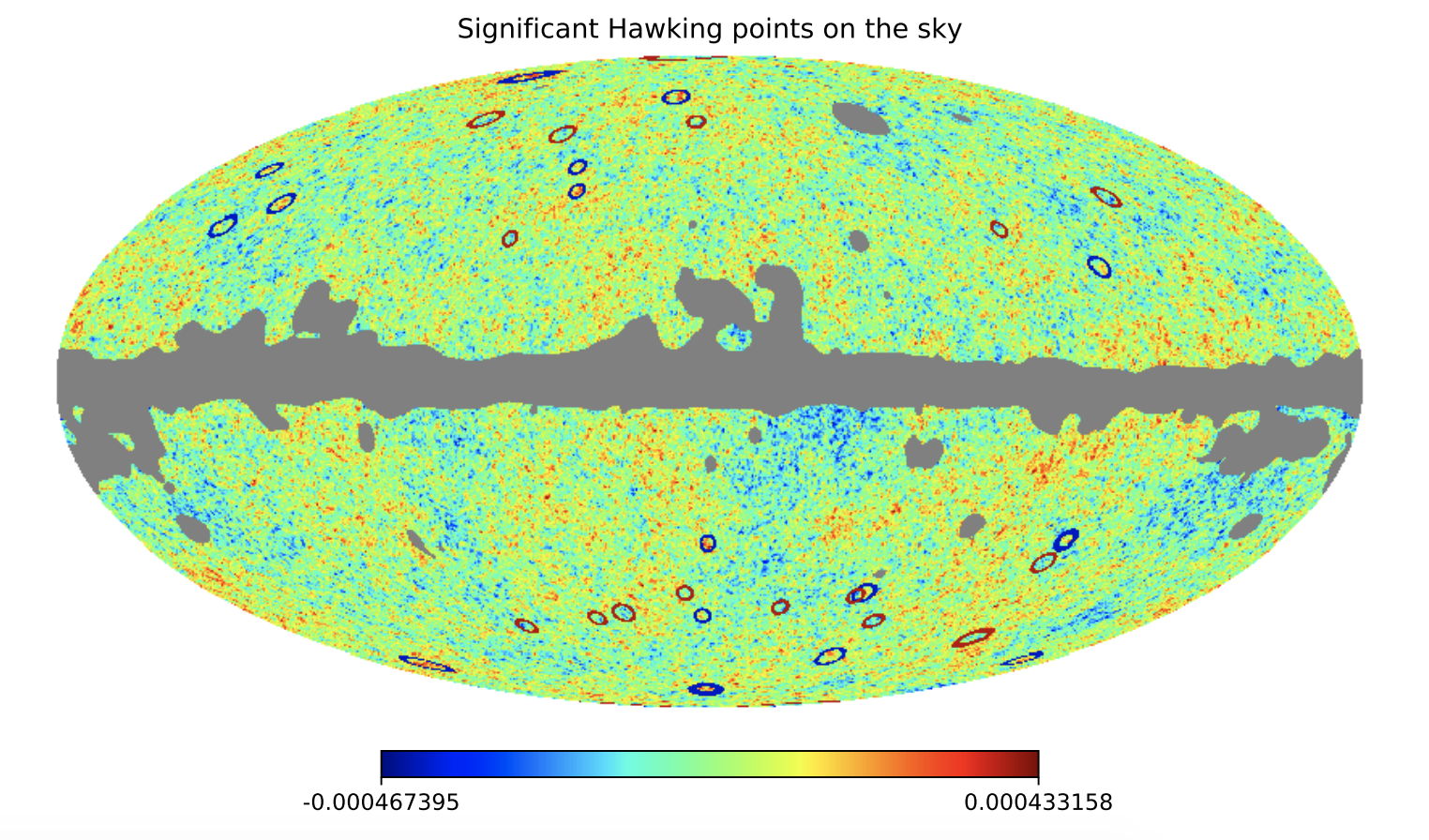
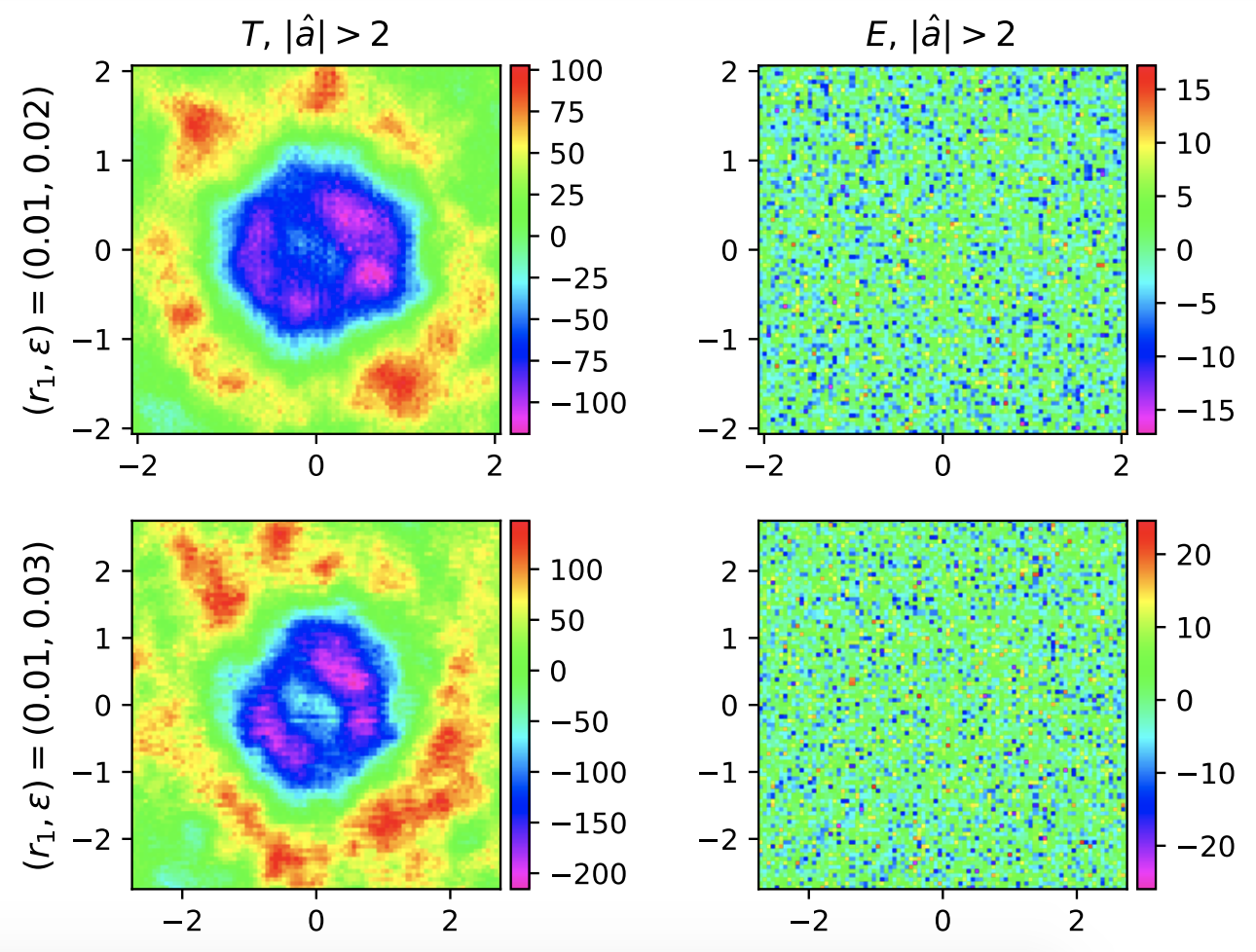
That would solve The Watchmaker Problem. If the universe has always existed, nothing created it. Penrose claims there's experimental evidence for CCC, in the form of rings, which he calls "Hawking Points"², present in the afterglow of the Big Bang².
The experimental evidence for CCC, and the CCC theory as a whole, are not widely accepted by the scientific community³. Whether it's true or not isn't the point though: Penrose gave it a serious shot.
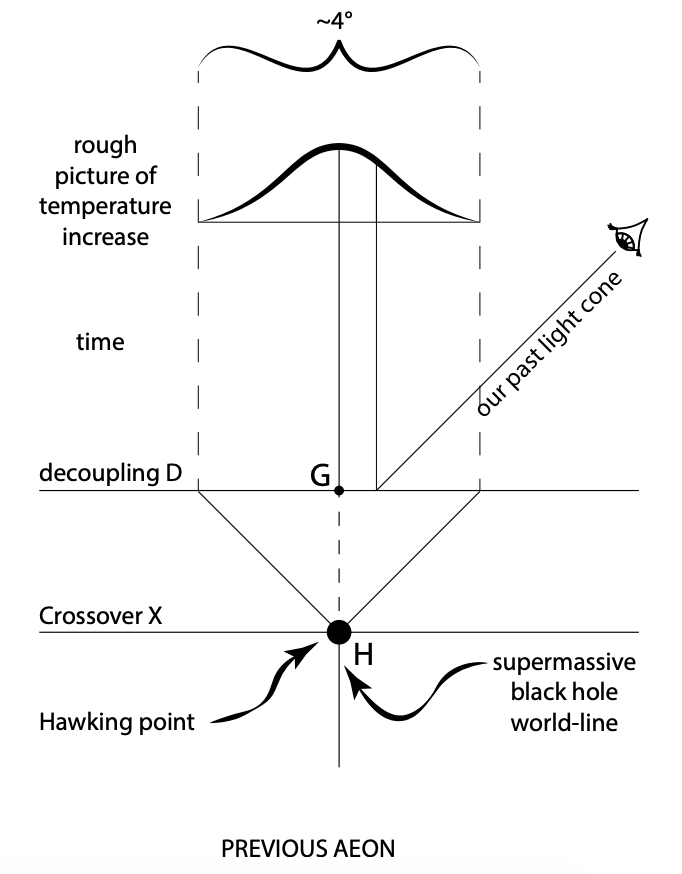
This diagram from one of Penrose's papers on CCC shows the core idea - cycles of time².
Note the "Previous Aeon" at the bottom.
These are images of the sky, from a study of the alleged rings in the afterglow of the Big Bang³:
I've long been fascinated with problems like Fermat's Last Theorem. There's a certain gravitas to a math problem unsolved since 1637. It has timelessness. There's epistemic humility: "this isn't easy".
This lens of thinking helps put into perspective purported solutions to tough problems. Did someone just recently, in the year 2024, finally figure out how to have harmonious romantic relationships?
I think of these in contrast with problems that are solved. Ear infection? Take an antibiotic.
Solved:
-
Homelessness
As of 2022, Finland had 3,686 people experiencing homelessness, with only 492 spending the night outside, in a country of 5.5 million people.⁴ How did they do that? "The country has adopted a Housing First policy, whereby social services assign homeless individuals rental homes first, and issues like mental health and substance abuse are treated second."⁵
The problem with programs that try to get people clean and healthy before giving them housing is that people in the situation of homelessness tend not to be in a state of mind, body, and life to successfully navigate administrative box-checking. A simple solution: "Housing First".
The United States has 653,104 people experiencing homelessness.⁶ Well over half a million, and a much higher per-capita rate than Finland (and Sweden, etc.). Homeless people in the US also generally live in more dangerous conditions than do homeless people in Finland.
-
"Poverty traps"
The long-observed economic phenomenon of a spiral into destitution that can happen below a certain level of wealth.⁷ Your car broke down and you can't afford to fix it, so you can't drive to your job. Choosing between food and medicine. Your problems compound. Finland again.
-
Capitalism or communism
Finland again. Capitalism with a strong social safety net. This need not be endlessly relitigated.
-
Mass incarceration, recidivism
Finland
-
Arguably the root of it all: unequal basic education.
Finland. No less than the constitution of Finland makes it illegal to charge tuition for basic education (the definition of which includes college).⁸ In other words, every school is funded exactly equally. There are some very minor exceptions to this, such as foreign-language schools.⁹
No "school districts". The flip side of "I bought an expensive house to be in a good school district" is that other children have to be in bad school districts. In other words, generational poverty.
In Finland, there is also no sorting of students by ability level, and there are no exams until the age of 18. There's many a story in the US about a student getting miscategorized early in life...as learning disabled, behaviorally-flawed, or otherwise "defective". There are many stories in which it wasn't even the student's ability or behavior, but rather secondary factors such as a teacher with a grudge, bigotry, and so on.
Paradoxically, I see more spirited debate about the solved problems than about the unsolved problems. It's common to accept reductive answers about the Fermi Paradox ("crop circles"), but argue to the ends of the Earth about capitalism.
I think that attitude misses potential in both directions. The unsolved problems are much more interesting, and the solved problems are much more important.
Sources:
¹: https://accelconf.web.cern.ch/e06/papers/thespa01.pdf
²: https://arxiv.org/pdf/1808.01740.pdf
³: https://arxiv.org/pdf/1909.09672.pdf
⁴: https://globalnews.ca/news/10198145/quebec-finland-successful-approach-homelessness-model
⁵: https://en.wikipedia.org/wiki/Homelessness_in_Finland
⁶: https://www.security.org/resources/homeless-statistics
⁷: https://en.wikipedia.org/wiki/Cycle_of_poverty
⁸: https://okm.fi/en/frequently-asked-questions
⁹: https://medium.com/@cailiansavage1/there-are-private-schools-in-finland-but-they-offer-the-same-education-based-on-the-national-4fe673d1b34a
¹⁰: https://www.britannica.com/topic/theodicy-theology