Bruce Lee and Lost Time
 ¹
¹
My father, an English literature major in college, used to tell me, paraphrasing the author Henry Miller, "the first word every author puts to the page is 'pain'".¹¹
In the case of Bruce Lee writing the book Tao of Jeet Kune Do, it was the pain of a very physical man becoming bedridden:
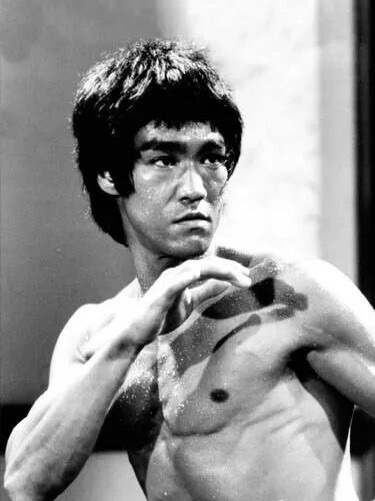
In 1970, Bruce sustained a rather severe injury to his back. His doctors ordered him to discontinue the practice of martial arts and to remain in bed to allow his back to heal. This was probably the most trying and dispiriting time in Bruce’s life. He stayed in bed, virtually flat on his back for six months, but he couldn't keep his mind from working — the result of which is this book.¹
I got interested in Bruce Lee around 2008. Of course Bruce Lee is so cool it was pretty easy to get interested. In the summer of 2008, I bought a copy of Tao of Jeet Kune Do.
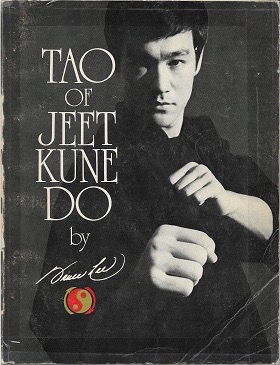
Jeet Kune Do is a martial art Bruce Lee invented.
Lee...based Jeet Kune Do upon his experiences in unarmed fighting and self defense, as well as upon his eclectic, Zen Buddhist, Confucianist and Taoist philosophies.²
I skipped around in the book and didn't read it cover-to-cover. It was good though. Inspiring.
More about Jeet Kune Do:
As an eclectic martial art, it relies on a fighting style heavily influenced by Wing Chun, Tai Chi, taekwondo, boxing, fencing and jujutsu.²From Bruce Lee's wife, Linda Lee:
My husband Bruce always considered himself a martial artist first and an actor second. At the age of 13, Bruce started lessons in the wing chun style of gung-fu for the purpose of self-defense. Over the next 19 years, he transformed his knowledge into a science, an art, a philosophy and a way of life. He trained his body through exercise and practice; he trained his mind through reading and reflecting and he recorded his thoughts and ideas constantly over the 19 years. The pages of this book represent the pride of a life's work.
In his lifelong quest for self-knowledge and personal expression, Bruce was constantly studying, analyzing and modifying all available relative information; his principle source was his personal library which consisted of over 2,000 books dealing with all forms of physical conditioning, martial arts, fighting techniques, defenses and related subjects.³
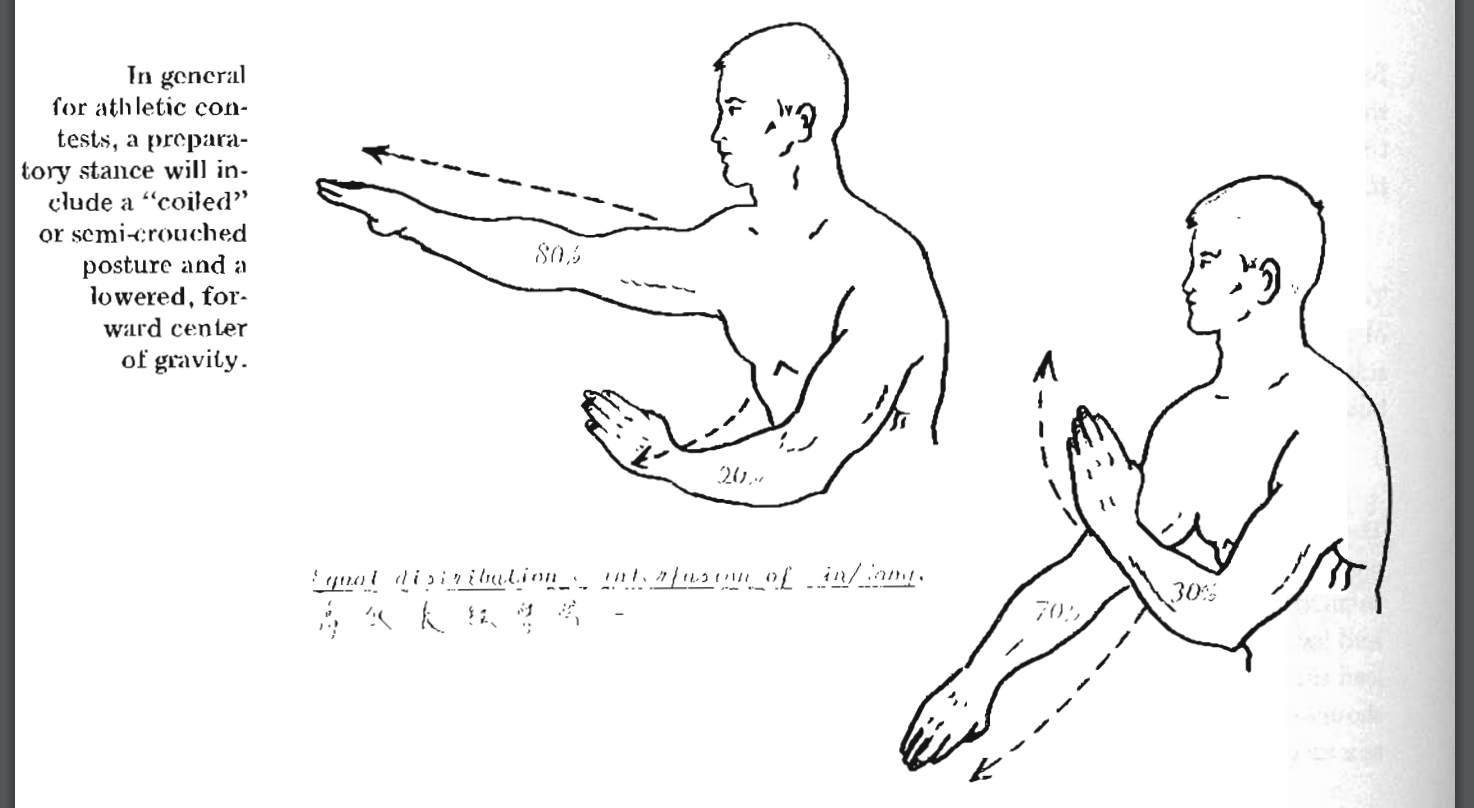
Tao of Jeet Kune Do has both philosophical ideas and specific techniques for combat situations.
An example of a combat-oriented diagram³:
Some examples of the philosophical parts of the book:
The aim of art is to project an inner vision into the world, to state in aesthetic creation the deepest psychic and personal experiences of a human being. It is to enable those experiences to be intelligible and generally recognized within the total framework of an ideal world.³
Art is never decoration, embellishment; instead, it is work of enlightenment. Art, in other words, is a technique for acquiring liberty.³Beautifully-stated by Lee.
Speaking of physicality, Lee was famous for his feats of strength, including his iconic two-finger push-ups.
Click the image below to see them in action (video is 30 seconds long and opens in a new tab):
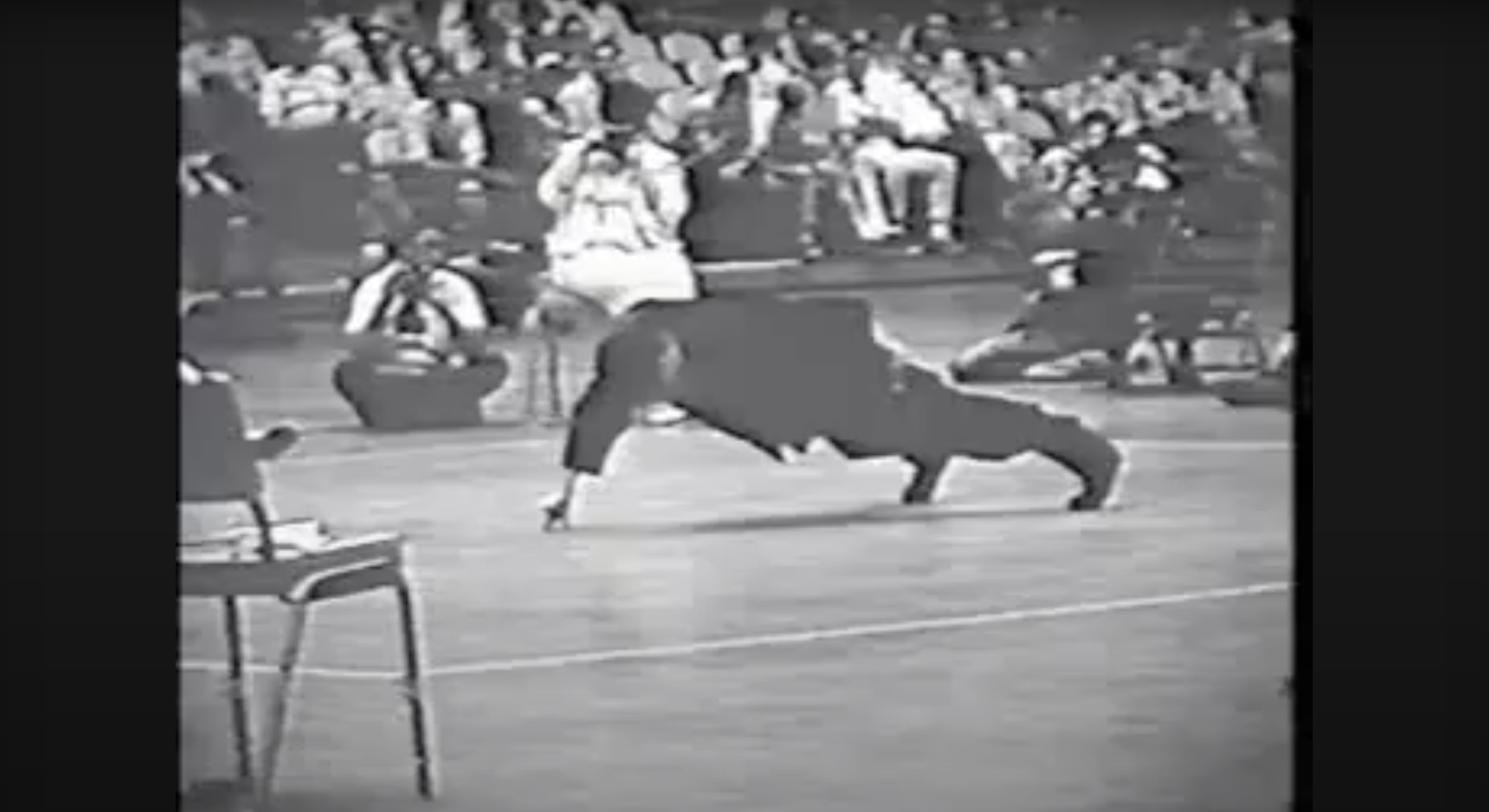
Around when I read the book, and mimetically inspired by Lee, I trained for thumbs-only push-ups:
For a while during his youth, Lee was involved with street gangs. One time, during a gang-related fight, he beat another young man so badly he knocked one of the guy's teeth out. The young man's parents complained to the police.
Lee's mother had to pick Lee up from the police station.
Later, Lee's father was warned by the police:
The police detective came and said, "Excuse me, Mr. Lee, your son is really fighting bad in school. If he gets into just one more fight I might have to put him in jail".
— Robert Lee⁴ (Bruce Lee's youngest brother⁵)
From that moment onward, Lee exited gang life, turning his focus towards peaceful activities such as philosophy, art, and self-improvement.⁴
The idea from Lee that's stayed with me most is martial arts as a means of honestly expressing oneself. To quote Lee:
to me, ultimately martial art means honestly expressing yourself⁶
Lee succeeded immeasurably in genuinely expressing himself. While best known for martial arts and films, he was expressive across many artistic media.
Lee's daughter Shannon Lee once said "He did write poetry; he was really the consummate artist."⁴ During his lifetime, he published the book Chinese Gung-Fu: The Philosophical Art of Self Defense.⁴ In addition, Tao of Jeet Kune Do and Bruce Lee's Fighting Method were both published posthumously.⁴ He acted in dozens of wildly successful films, starting from early childhood.⁷ And of course he created his own martial art and philosophy.
Returning to Lee's idea of martial arts as a means of honestly expressing oneself, I think a lot of things are about honestly expressing oneself.
The French author Marcel Proust published his monumental 1,267,069-word novel In Search of Lost Time (À la recherche du temps perdu) in installments between 1913 and 1927.⁸ In the novel, the narrator, a thinly disguised version of Proust himself, searches for "lost time".⁹ In other words, he tries to answer the question: how can you reclaim the time you feel you've "lost" in life?⁹
It's a feeling most people have experienced: years lost to bad decisions, distractions, and failures. There's a belief that things could have gone differently, could have been much better.
After much searching, Proust's narrator comes to an oddly specific conclusion: the answer is art. In particular, the solution is to transmute the pain of lost time by using the bad experiences as the basis for creating works of art.⁹
Returning to the prior circumstances of his life in order to translate them into a work of art is the means by which the Narrator reclaims the time lost in years gone by. The Narrator comes to discover that time he thought wasted, in frivolous society or in love, now comes to represent the materials from which he will compose his art.¹⁰That's one of the best ideas I've encountered in literature.
I should say, that's what a person of high integrity does. It's just as common to become a resentful, abusive jerk on account of one's bad experiences in life.
Bruce Lee took the high-integrity approach, though. For example, he transmuted the lost time of six months bedridden into the best-selling martial arts book of all time.
Similarly, one can speculate that the regret from the "lost time" of a youth of crime motivated the profusion of artistic beauty we see in Bruce Lee's subsequent life.
Sources:
¹: https://ia601308.us.archive.org/16/items/pdfy-SP1dBDr6xLGrVfF9/Tao%20Of%20Jeet%20Kune%20Do.pdf
²: https://en.wikipedia.org/wiki/Jeet_Kune_Do
³: https://ia601308.us.archive.org/16/items/pdfy-SP1dBDr6xLGrVfF9/Tao%20Of%20Jeet%20Kune%20Do.pdf
⁴: https://en.wikipedia.org/wiki/Bruce_Lee
⁵: https://en.wikipedia.org/wiki/Robert_Lee_Jun-fai
⁶: https://www.youtube.com/watch?v=X2clpHtV1iA
⁷: https://en.wikipedia.org/wiki/Bruce_Lee_filmography
⁸: https://en.wikipedia.org/wiki/In_Search_of_Lost_Time
⁹: https://www.youtube.com/watch?v=9mLdo4uMJUU
¹⁰: https://stars.library.ucf.edu/cgi/viewcontent.cgi?article=1193&context=etd2023
¹¹: https://www.goodreads.com/quotes/8935685-the-truly-great-writer-does-not-want-to-write-he
¹²: https://en.wikipedia.org/wiki/File:Tao_of_Jeet_Kune_Do.jpg