My Side of the Mountain
by Jean Craighead George
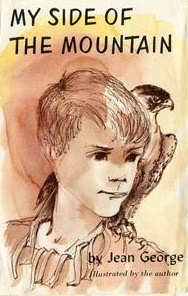 ¹
¹
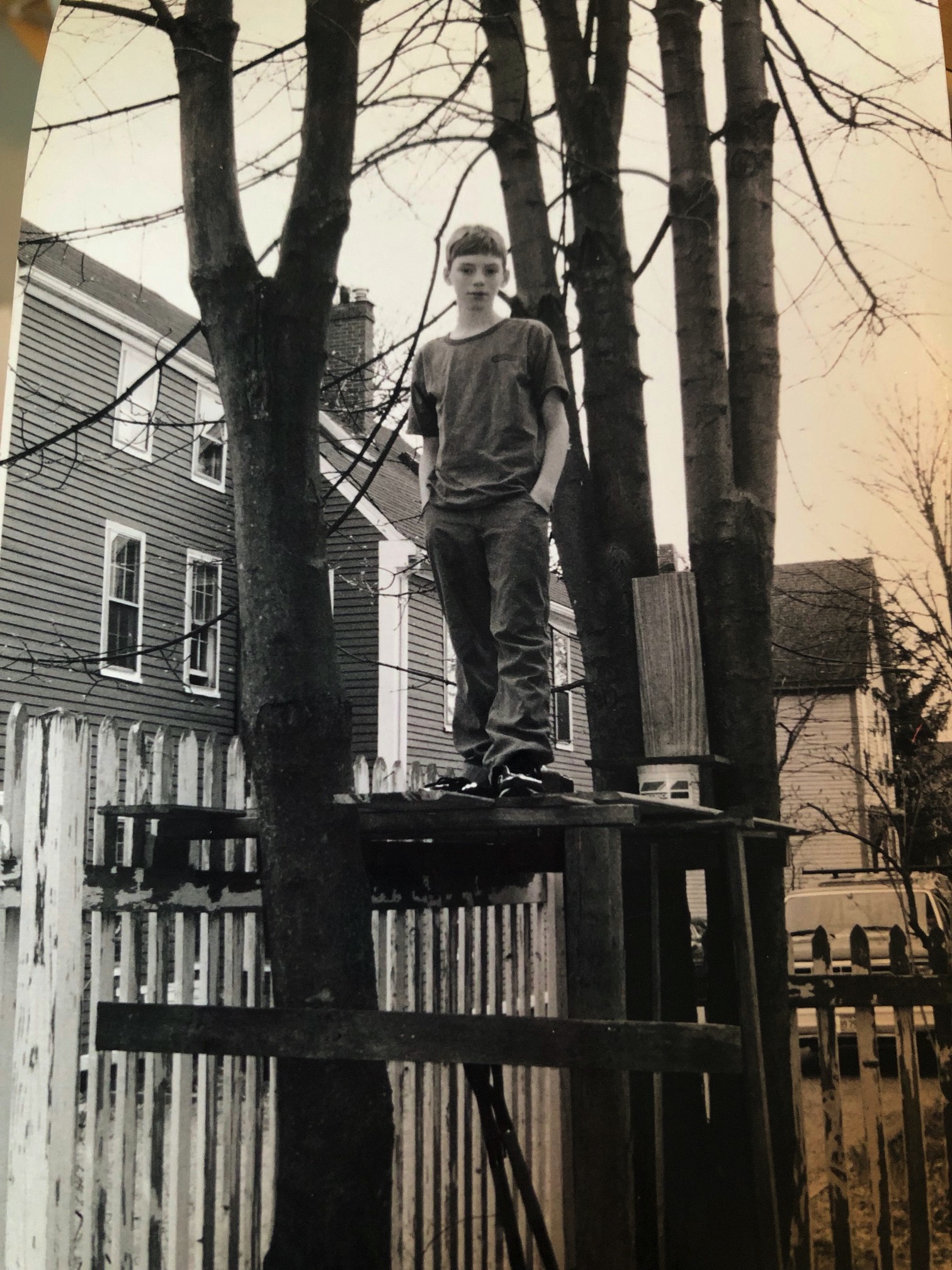
My Side of the Mountain is a middle-grade adventure novel written and illustrated by American writer Jean Craighead George published by E. P. Dutton in 1959. It features a boy who learns courage, independence, and the need for companionship while attempting to live in the Catskill Mountains of New York State. In 1960, it was one of three Newbery Medal Honor Books (runners-up) and in 1969 it was loosely adapted as a film of the same name.¹
I read My Side of the Mountain when I was around 8 years old, in around 1998.
I once read an opinion that went something like "cozy is the best feeling". My Side of the Mountain is coziness in book form. Its coziness is the coziness of watching a rainstorm through a half-closed window, wrapped in a blanket.
From the book:
With Christmas over, the winter became serious. The snows deepened, the wind blew, the temperatures dropped until the air snapped and talked. Never had humanity seemed so far away as it did in those cold still months of January, February, and March. I wandered the snowy crags, listening to the language of the birds by day and to the noises of the weather by night. The wind howled, the snow avalanched, and the air creaked.
I slept, ate, played my reed whistle, and talked to Frightful.
To be relaxed, warm, and part of the winter wilderness is an unforgettable experience. I was in excellent condition. Not a cold, not a sniffle, not a moment of fatigue. I enjoyed the feeling that I could eat, sleep and be warm, and outwit the storms that blasted the mountains and the subzero temperatures that numbed them.7(page 130)
Over 4 million copies of My Side of the Mountain have been sold⁸. About the Newbery Medal, for which My Side of the Mountain was a runner-up:
[The Newbery Medal] ... is a literary award given by the Association for Library Service to Children (ALSC), a division of the American Library Association (ALA), to the author of "the most distinguished contributions to American literature for children". The Newbery and the Caldecott Medal are considered the two most prestigious awards for children's literature in the United States.³
Another of Ms. George’s books, titled “Julie of the Wolves”, fully won The Newbery Medal in 1973.⁴
More on the plot of My Side of the Mountain:
Sam Gribley is a 12-year-old boy who intensely dislikes living in his parents' cramped New York City apartment with his eight brothers and sisters. He decides to run away to his great-grandfather's abandoned farm in the Catskill Mountains to live in the wilderness. The novel begins in the middle of Sam's story, with Sam huddled in his treehouse home in the forest during a severe blizzard. Frightful, Sam's pet peregrine falcon, and The Baron, a weasel, share the home with him. In a flashback, Sam reminisces about how he came to be there.
...
Sam forages for edible plants and traps animals for food. He uses fire to make the interior of a hollow tree bigger. Seeing a peregrine falcon hunting for prey, Sam decides he wants a falcon as a hunting bird. Sam goes to town and reads up on falconry at the local public library. He steals a chick from a falcon's nest and names the bird Frightful.
...
Frightful proves to be very good at hunting. Sam prepares for winter by hunting, preserving wild grains and tubers, smoking fish and meat, and preparing storage spaces in hollowed-out trunks of trees. Finding another poached deer, Sam makes himself deerskin clothing to replace his worn-out clothes. Sam notices a raccoon digging for mussels in the creek and learns how to hunt for shellfish.
In June, Sam is surprised to find his family has come to the Gribley land. His father announces that the family is moving there. Sam is happy at first, then also upset because it means the end of his self-sufficiency. As the novel ends, Sam concludes that life is about balancing his desire to live off the land with his desire to be with the people he loves.²
About the author:
Jean Carolyn Craighead George...was born on July 2, 1919, in Washington DC. She was raised in a family of naturalists. Her mother, father (Frank Craighead Sr.), brothers (Frank and John), aunts, and uncles were students of nature. On weekends they camped in the woods near Washington, climbed trees to study owls, gathered edible plants, and made fish hooks from twigs. Her first pet was a turkey vulture. George centered her life around writing and nature.
George graduated in 1940 from Pennsylvania State University with degrees in both English and science. In the 1940s she was a member of the White House Press Corps and a reporter for The Washington Post. From 1969 to 1982 she was a writer and editor at Reader's Digest.⁵
Ms. George is superbly accomplished and prolific. She lived to the age of 92, passing away in 2012, and wrote more than 100 books⁵.
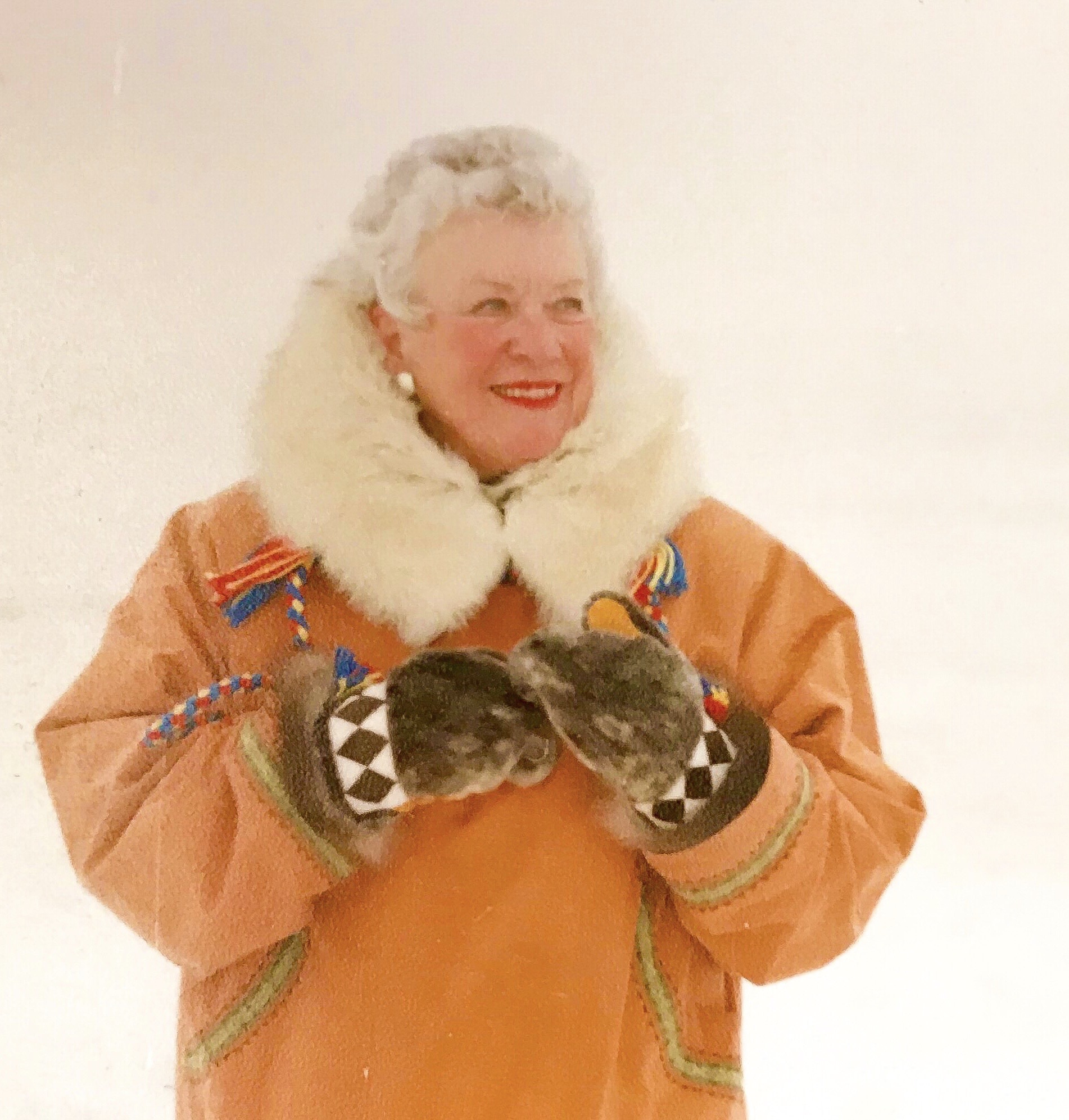 ⁶
⁶
A photo of Ms. George. What a wonderful woman.
My Side of the Mountain is saturated with wonder and magic. To me, it's more riveting, more compelling, and more magical than even the likes of The Lord of the Rings.
Part of the magic is that, unlike The Lord of the Rings, it's set in the real world, with a plot that's realistically possible (though unlikely).
Because of that plausible realism, it's easy to slip into identifying with Sam Gribley. One can identify with his practical struggles against nature, his alignment with nature, his use of tools, and his exaltation to be so enmeshed in nature.
Sam meets people during his adventures. None join his space permanently, though. For example, he meets an English professor who got lost in the woods, the two become friends, and the professor visits Sam at Christmas7(pages 82, 119). However, neither ends up living near the other.
It's only as an adult that it occurs to me how culturally American the book is. For example, the "ruralist" mentality of the book.
Ruralism is, for example, a person striking out into the wilderness, building their own home, and creating a mostly self-sufficient life (gardening and so on). Also, and especially, it would be that they'd do so alone or with just one or two companions: the US is also quite culturally individualistic. Richard Proenneke, a famous ruralist in the Alaskan wilderness, and Chris McCandless (the subject of the book "Into the Wild"), both of whom are American, come to mind.
Many years ago, a family friend of ours married into a family from Finland. My father said it once came up in conversation that one of the young men on the American side had gone into the forest and built a cabin or treehouse. Someone from the Finnish side said that that would be unusual in Finland: doing so alone, that is.
The loneliness of ruralist individualism creates a key narrative tension in the book. There's Sam's love of nature and solitude on one side, and his love of people and companionship on the other.
Ms. George handles that tension with great nuance. In part, she handles it through Sam's bond with his pet falcon, Frightful.
One day when I was thinking very hard about being alone, Frightful gave her gentle call of love and contentment. I looked up. 'Bird,' I said. 'I had almost forgotten how we used to talk.' She made tiny movements with her beak and fluffed her feathers. This was a language I had forgotten since Bando [the English professor] came. It meant she was glad to see me and hear me, that she was well fed, and content. I picked her up and squeaked into her neck feathers. She moved her beak, turned her bright head, and bit my nose very gently.7(page 86)
Ms. George beautifully conveys her love of nature. She uses descriptive detail of a profundity that must well up from an equal depth of personal rapture.
I lived close to the weather. It is surprising how you watch it when you live in it. Not a cloud passed unnoticed, not a wind blew untested. I knew the moods of the storms, where they came from, their shapes and colors. When the sun shone, I took Frightful to the meadow and we slid down the mountain on my snapping-turtle-shell sled. She really didn't care much for this.
When the winds changed and the air smelled like snow, I would stay in my tree, because I had gotten lost in a blizzard one afternoon and had had to hole up in a rock ledge until I could see where I was going. That day the winds were so strong I could not push against them, so I crawled under the ledge; for hours I wondered if I would be able to dig out when the storm blew on. Fortunately I only had to push through about a foot of snow. However, that taught me to stay home when the air said 'snow.' Not that I was afraid of being caught far from home in a storm, for I could find food and shelter and make a fire anywhere, but I had become as attached to my hemlock house as a brooding bird to her nest. Caught out in the storms and weather, I had an urgent desire to return to my tree, even as The Baron Weasel returned to his den, and the deer to their copse. We all had our little 'patch' in the wilderness. We all fought to return there.7(pages 131-132)
Sam on the elemental majesty of starting a fire with tinder and flint:
I must say this now about that first fire. It was magic. Out of dead tinder and grass and sticks came a live warm light. It cracked and snapped and smoked and filled the woods with brightness. It lighted the trees and made them warm and friendly. It stood tall and bright and held back the night. Oh, this was a different night than the first dark frightful one. Also I was stuffed on catfish. I have since learned to cook it more, but never have I enjoyed a meal as much as that one, and never have I felt so independent again.7(page 28)
Coziness is just one of many emotions so wonderfully evoked in the book. Another is the Thoreauvian pleasure of meeting a stranger in the woods.
My father used to paraphrase Henry David Thoreau, possibly from Thoreau's essay "Walking"⁹, as having said it's always good to meet someone in the woods. My father also used to note that it's rare to truly meet someone in the woods. In particular, it's rare to meet someone off blazed trails and far from any particular attraction in nature.
Growing up in rural Maine, surrounded by forests, I noticed this too. One can usually walk all day in the woods without meeting a soul.
Another well-evoked emotion is the sparkling wonder of a pristine forest stream, serendipitously discovered on a warm summer's day.
I must have walked a mile into the woods until I found a stream. It was a clear athletic stream that rushed and ran and jumped and splashed. Ferns grew along its bank, and its rocks were upholstered with moss.7(page 16)
My Side of the Mountain is mesmerizing art of the highest order.
This is the author’s preface — Ms. George’s description of the process of writing and publishing the book:
When I was in elementary school, I packed my suitcase and told my mother I was going to run away from home. As I envisioned it, I would live by a waterfall in the woods and catch fish on hooks made from the forks of tree limbs, as I had been taught by my father. I would walk among the wildflowers and trees, listen to the birds, read the weather report in the clouds and the wind, and stride down mountainsides independent and free. Wisely, my mother did not try to dissuade me. She had been through this herself. She checked my bag to see if I had my toothbrush and a postcard to let her know how I was getting along, and kissed me good-by. Forty minutes later I was home.
When my daughter, Twig, was in elementary school, she told me she was going to run away to the woods. I checked her backpack for her toothbrush and watched her go down the front steps, her shoulders squared confidently. I blew her a kiss and sat down to wait. Presently, she was back.
Although wishing to run to the woods and live on our own seems to be an inherited characteristic in our family, we are not unique. Almost everyone I know has dreamed at some time of running away to a distant mountain or island, castle or sailing ship, to live there in beauty and peace. Few of us make it, however.
It is one thing to wish to go, and another matter to do it. I might have been able to do what Sam Gribley does in this book—live off the land, make a home, survive by wits and library research, for I had the knowledge. My father, who was a naturalist and scientist, taught me the plants and animals of eastern forests and showed me where the wild edible fruits and tubers grew. On weekends along the Potomac River near Washington, D.C., where I was born and grew up, he and I boiled water in leaves and made rabbit traps. Together we made tables and chairs out of saplings bound with the braided inner bark of the basswood tree. My brothers, two of the first falconers in the United States, helped me in the training of a falcon. I had the know-how for surviving in the woods; and yet I came home.
'But not Sam,' I said to myself when I sat down at my typewriter and began putting on paper this story, one that I had been writing in my head for many, many years.
The writing came easily—Sam needed a home. I remembered a huge tree my brothers had camped in on an island in the Potomac River. A tree would be Sam’s home. And I knew how he would survive when foraging became tough. 'A falcon will be his provider,' I said to myself.
With ideas coming fast, the first draft was done in two weeks. Five revisions later, it was finished and off to the publisher. Back came a phone call from Sharon Bannigan, the editor of E. P. Dutton’s children’s book department at that time.
'Elliott Macrae, the publisher,' she said, 'won’t print the book. He says parents should not encourage their kids to leave home.'
Discouraged, I hung up the phone and walked out into the woods behind the house. As always when I am in the wildwood, I very quickly forgot what was troubling me. A sentinel crow was protecting its flock by watching the sky for hawks; a squirrel was building a nest of leaves for the winter; a spider was tapping out a message to his mate on a line of her web.
Better to run to the woods than the city, I thought. Here, there is the world to occupy the mind.
The telephone rang. Sharon Bannigan was back on the wire, and she was almost singing. Elliott Macrae had changed his mind. And what, I asked her, had worked the miracle?
'I simply told him it is better to have children run to the woods than the city,' she said. 'He thought about that. Since he has a home in the wilds of the Adirondack Mountains and goes off there alone himself, he suddenly understood your book. My Side of the Mountain will be published in the spring of '59.'
From that date to this, I have been answering children’s letters about Sam. Most want to know if he is a real person. Some, convinced that he is, have biked to Delhi, New York, from as far away as Long Island, New York, to find his tree, his falcon, weasel, and raccoon. To these and all others who ask, I say, 'There is no real Sam, except inside me.' His adventures are the fulfillment of that day long ago when I told my mother I was going to run away, got as far as the edge of the woods, and came back. Perhaps Sam will fulfill your dreams, too. Be you writer or reader, it is very pleasant to run away in a book.10 (pages xi-xiv)
It's said that the people you meet in life may not remember your name or exactly what you said, but they'll always remember how you made them feel. In the same way, I don't remember every detail from My Side of the Mountain, but I'll always remember how it made me feel.
Sources:
¹: https://en.wikipedia.org/wiki/File:My_Side_of_the_Mountain.jpg
²: https://en.wikipedia.org/wiki/My_Side_of_the_Mountain
³: https://en.wikipedia.org/wiki/Newbery_Medal
⁴: https://en.wikipedia.org/wiki/Julie_of_the_Wolves
⁵: https://en.wikipedia.org/wiki/Jean_Craighead_George
⁶: https://en.wikipedia.org/wiki/File:Jean_Craighead_George,_Barrow,_AK,_1994.jpg
⁷: George, J. C. (1972). My side of the mountain. Puffin Books. ISBN 0-14-030363-4
⁸: https://blackwells.co.uk/bookshop/product/My-Side-of-the-Mountain-Puffin-Modern-Classics-by-Jean-Craighead-George/9780142401118
⁹: https://www.gutenberg.org/cache/epub/1022/pg1022-images.html (“I have met with but one or two persons in the course of my life who understood the art of Walking”)
¹⁰: George, J. C. (2004). My side of the mountain. Puffin Books.